
Cracking Innovation
A little creativity, clever design, and a dash of 3D printing have created an egg-cellent new teaching resource for hospitality students at Queen Elizabeth College.
Learning to crack an egg is a rite of passage for anyone stepping into the kitchen. For many students, it is one of the first skills they master on the journey to becoming confident cooks and bakers. Now, thanks to a collaboration between Queen Elizabeth College and the Manawatū Community Hub Libraries (MCHL) Makerspace at Te Āhuru Mōwai, students can practise the technique without wasting eggs or dealing with messy mistakes.
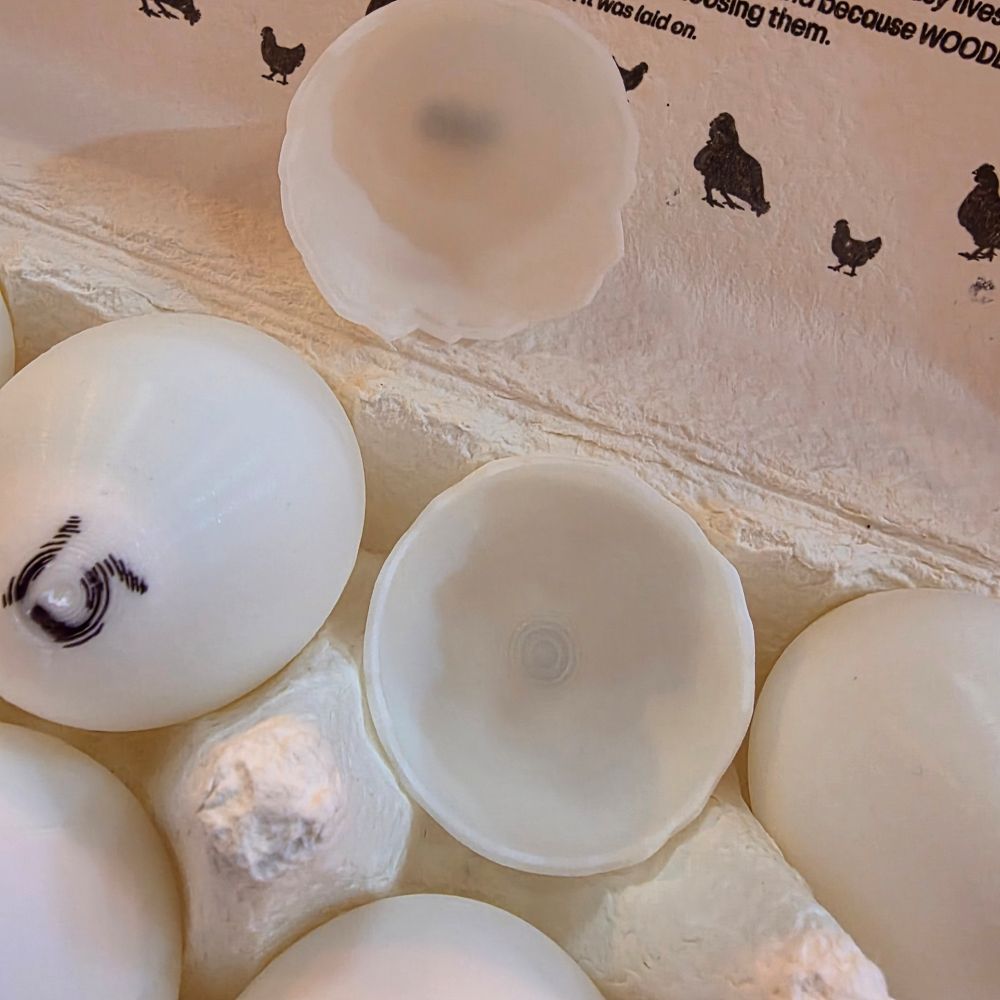
Junior Food Teacher Mrs Rickie Allen-French was looking for a reusable tool to help students learn the movement and technique involved in cracking and separating an egg. The solution was a realistic, 3D-printed egg that can be cracked open, reassembled, and used again.
The reusable eggs help students build the movement and coordination needed to crack and separate an egg. “It gives them confidence without losing a good egg along the way,” says Mrs Allen-French.
The idea began when Mrs Allen-French approached the MCHL Makerspace for help creating a teaching resource. Makerspace Specialist Stew Wilson explored several options before they selected a final design. The model was trial printed, tested, and refined for classroom use.
“Once the first one printed successfully and worked how I imagined, we knew we had something that would be genuinely useful in the classroom,” says Mrs Allen-French.
Following the successful trial, a further 30 eggs were printed to provide enough resources for classroom use, including larger groups of up to 28 students. The eggs will primarily support Year 7, 8, and 9 hospitality students, with potential use extending to Year 10 classes.
The project highlights how makerspaces can support education by providing access to technology, encouraging problem-solving and delivering creative, cost-effective solutions.
“Makerspaces are about turning ideas into reality,” says Stew Wilson. “3D printing allows us to transform a digital model into a physical object by building it layer by layer. The result is a practical resource that can be used, shared, and improved.”
Mrs Allen-French is already looking at future possibilities. “I’m hoping to spend some more time creating useful resources for my classes,” she says.
While these eggs will never make it into a recipe, they are helping students build the confidence and technique. It is a reminder that sometimes the smallest innovations can make a big difference in learning.
For more information about the Makerspace: Makerspace | Manawatū Community Hub Libraries
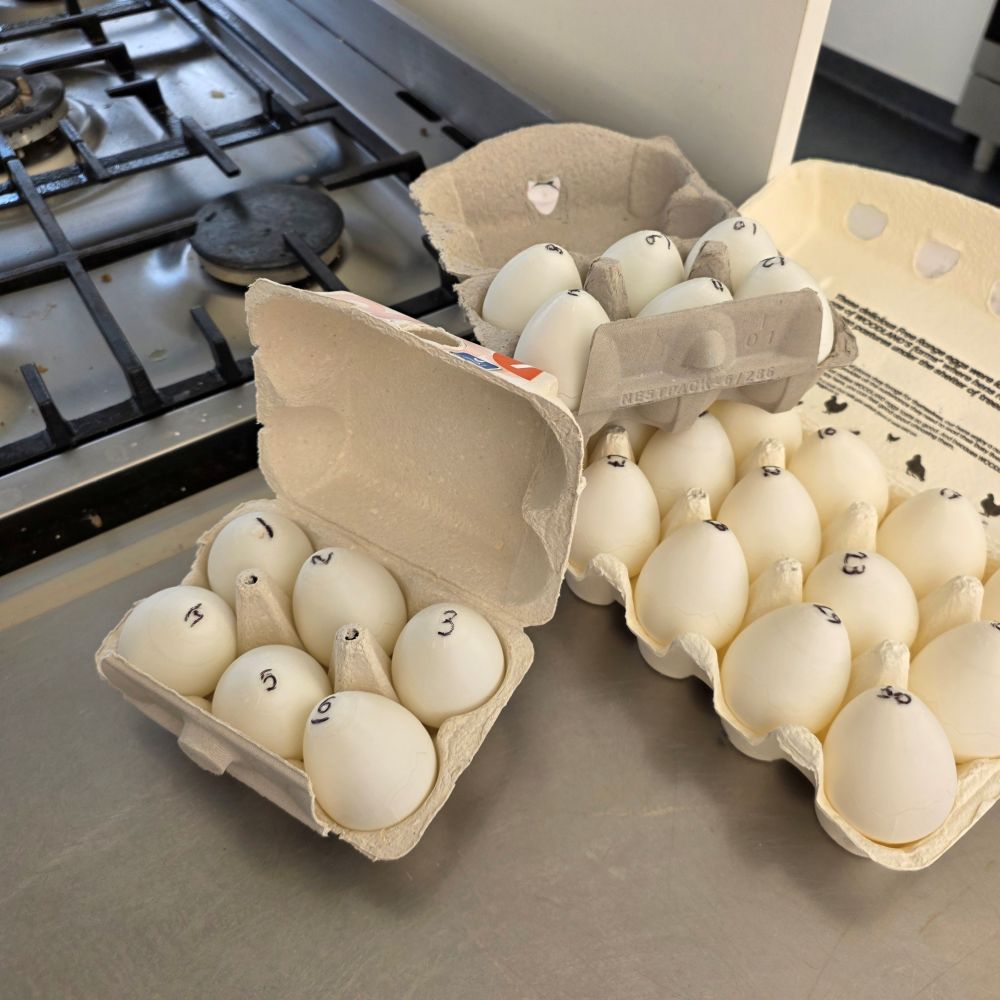
Egg-cellent new teaching resource: 3D-printed eggs sit in cartons, ready for students at Queen Elizabeth College to use.